Saturday, April 18, 2020

Why Is This So Hard?

by Marilyn Moore


“Why can’t I get anything done?”  “I’m not feeling very productive.”  “I used to be really efficient, but not now….”  “I thought I’d have all this extra time, but somehow or other, it’s not working for me.”  I have read these words, heard these words, and said these words, over the past five weeks.  From people at all ages and stages of life, from those who are parents, those who are empty-nesters, those who are single, from women and from men (well, mostly women….), from introverts and extroverts and those who are a little of both.   And I’ve thought about why it is….how did all these accomplished, organized, high-achieving folks come to these words?

I think that before The Great Upheaval, which is my label for the time in which we are living, we had figured out how to live our current life as best it could be lived.  Whatever the routine was, we had one.  However many activities in the day, from one to thirteen, we had a plan that worked.  It might have been a plan that was exhausting, or stressful, but it was a plan….we knew what to expect, we knew how to organize time and resources for it, and we were doing it at the highest level we could do it.

And then, within a few days, almost everything changed.  Work changed: many people started to work from home; some people continued to work at the same job in the same place, but with dramatic differences in the work site; some people were out of work altogether.  Child care and school changed, and parents who were trying to work from home, or still trying to go to work, were also trying to supervise children who were trying to learn online, or whose child care site had closed.  Grocery shopping changed.  Social destinations were shut down.  More meals were eaten at home.  Medical appointments morphed to telehealth.  And Zoom meetings/gatherings became a thing, followed shortly by Zoom bombing….and further Zoom security.  And every single one of you could add to this list, in fact, you’re probably doing so right now.

So for the first couple of weeks, we all lived on adrenaline, that rush that says, “I can do this!”  We thought to ourselves, this is only for a short time, and I can do anything for a couple of weeks.  And then, when it became clear it’s not for a short time, and the adrenaline levels returned to a more normal level, because you can’t live on adrenaline forever, those articles and advice columns that said we could use this time to write, to compose, to create a new brand, to start a new fitness plan, to clean out 30 years of accumulated books and photos, and for our own personal to-do list of projects we always wanted to do if we just had the time….that all just seemed like a really diabolical practical joke.  Not only could I not do all, or any, of that, I couldn’t figure out what day of the week it was, and where I’d filed the last Zoom meeting invitation.

And then I remembered, the implementation dip.  Those of you in LPS will remember that Michael Fullan, who I believe is the best researcher on change theory and leading change, described a very real part of change in any organization, or any person’s life, and that is the implementation dip.  Simply said, when any change is undertaken, performance immediately following the implementation of that change will be less than performance right before the change.  That’s because the system before change is functioning as well as it can in the current system.  And as people learn new skills, new habits, new ways of acting and being, they won’t be as effective immediately as they were with the old habits and skills.  (And cheers here to the doctors and nurses and respiratory therapists who are learning new practices every day, practices that have been revised from the day before; their learning is literally a matter of life and death for their patients, and for all of us.) 

Fullan’s research is in schools and hospitals and businesses, and he studied those big changes that were carefully planned, that included significant training before implementation, that were based on field tests and pilot studies – and even with all that in place, there would still be a time period when performance would dip.  We, of course, had none of the advance work….we didn’t have months or weeks to plan our new lives, we didn’t have training for this, there were no field tests or pilot studies, except for what was happening in other parts of the world, which we tended to ignore, because we thought it couldn’t possibly happen here.  

But it did…and here we are, in the midst of The Great Upheaval and a subsequent implementation dip.  And in addition to not having time to prepare, nor a map of what this new normal might look like, we’re also always aware of the lurking danger of this disease, worried that it will strike ourselves or those we love.  And the rules keep changing....groups of 250 to 50, to 10.  Masks aren't necessary; everybody wear a mask.  That's because new information is being discovered practically every day about this new disease.  So of course we’re not as productive, nor efficient, nor is it likely I will complete my own early-on list of projects; for the moment, I’m proud of having cleaned out the pantry.  Hardly something to put in the Christmas letter, but it may be the best I’ll have….

There aren’t any do-overs on this.  We can’t go back to January and say to ourselves,  “I think life is really going to change in a few weeks, and I’ll start now to be ready.”  So we have what we have.  I’m beginning to re-define what “good” looks like for this time in The Great Upheaval, and it’s not checking off projects.  It’s staying healthy, staying in touch with those I love, and supporting people and organizations that are filling in the many huge cracks in society, building safety nets as they go.

Another key part of Fullan’s research speaks to what leaders do when people are in the implementation dip; they constantly remind people of the why.  Why are we doing this?  What’s the reason for this?  What will be the outcome?  How will life be better?  And the why for this is pretty is simple.  We are in the midst of a pandemic, of a disease that is highly contagious, with a high mortality rate, and with no vaccine and no therapeutic treatment.  We can hope, we can pray, and we can take action….and most of us are probably doing all three.

When I wrote five weeks ago, there had been 58 deaths in the United States from Covid-19.  Tonight, there have been 35,443.  In five weeks time.  We are staying home, figuring out new ways to meet basic needs, to contribute our efforts to keep that number from growing exponentially higher in the next five weeks.  We can view that act of staying home as an act of fear, fear that we will get sick, or an act of faith, faith that we’re part of an effort that’s bigger than any single person or institution.  I choose to see it as an act of faith, faith in scientists, in health care providers, in those essential workers that make staying home possible for so many, and in our collected, connected community.

And when this is over, and someday it will be over, my hope is best expressed in what I heard Mary Pipher, one of the world’s wise women, say she told her ten-year-old grandson.  She told him that when he remembered these days in the future, she wanted him to remember how strong he was.  That’s what I want us to remember, too….how strong we were.


Saturday, April 11, 2020

Counting gowns, memories, promises: Getting through the night with COVID-19

By Mary Kay Roth

At first the bed sheets came from my own cupboards, then from Amazon.  Now they are quiet donations from friends, neighbors, people I don’t even know, leaving brown paper bags on my porch. I take one sheet at a time and carefully cover it with a paper pattern crafted from holiday gift wrap. Pins were a challenge, but fortuitously I had stashed away my mother’s old sewing kit – and sure enough, nestled inside was a clear plastic box of pins. So I fasten a pattern to each sheet, cut along the edges – and another nursing gown is ready to sew.

I am no seamstress, but many a morning after my sunrise walk, I delivery my cutouts to our growing circle of Breaking Thread – wonder women who are also cutting patterns, as well as stitching patterns together. Each Friday I collect finished gowns and deliver them to the local health care facility where my daughter works as a nurse.

The horror over conditions our health care workers face in this insidious pandemic – across the world and country – hit close to home and heart this month with confirmation there clearly may not be enough protective gear in Lincoln. Though local health officials are doing valiant work to find all possible supplies, they are running into national shortages everywhere.  So, as the virus smolders, my daughter and her co-workers have one disposable surgical mask each – and not nearly enough of anything. 

I keep myself busy during daylight hours, but around 3 a.m. the walls come tumbling down and I find myself in the dark abyss of COVID-19. I am scared for the entire planet, but of course especially for my sweet, compassionate grown-up child who has spirit and fire, and who will – in all probability – do her best to make sure people don't die alone.

So instead of counting sheep, I count gowns.  I picture Anna in the middle of an impossible day at work, grabbing the sky-blue gown – sprinkled with stars – that seamstress Nancy created from my son’s childhood sheets … or the gown swimming with comical sharks that Mary stitched from my neighbor’s linens.

Gowns have worked up to now.  Tonight, I need more. In reverence for this profound season of rebirth, I pause to count a few scattered memories I want to hold close – to count a few promises I want to keep.   

I start by counting up the world’s health care workers and their soulful eyes, weary and sad, yet ever caring and fiercely resilient – the touching, committed smiles of teachers, reinventing education overnight – employees who continue to show up, at grocery stores, child care centers, police and fire departments.  And I need to remember the tireless staff at our amazing non-profits, doling out food, diapers, hope – understanding this is a marathon and they will need our support in the many difficult months ahead.  

I also count the magical moments of these solitary days: the glory of dawn, dazzling daffodils, the sound of cricket frogs, the surprise of bouquets and homemade bread at my door. 

At the same time, strange as it sounds, I want to count and hang onto my anger, so fierce and furious it surprises even me.  But as election season approaches, I vow to remember the incompetent narcissist in charge of our country – a man who silences truth-tellers, ignores experts and continues to kill thousands of our most fragile citizens. I pledge to campaign this season as never before.

Moreover, I need to acknowledge and measure my good fortune and middle-class privilege. I am warm and safe with well-stocked cupboards and a steady budget, while this pandemic shines a cruel light on glaring inequities that have long plagued our country. My son works in a high-poverty school in Kansas City and worries less about daily lessons – and much more about children living in unsettled homes with empty refrigerators and inevitable eviction notices. Eventually the pandemic will ease, while poverty will not.  I need to hit the pause button for some hard-hitting self-examination.  

I am lucky.  These are difficult times, but I hope to remember all the friends and family who Zoomed at the exact right moment, kisses blown from afar, dogs who rested their head on my lap when I cried – and intrepid seamstresses who sewed gowns and masks into the night.

Finally, in the light of Easter morning – snow or not – I pledge to never again take for granted our precious gift of touch … as I count down the weeks, days, minutes before I can take my grandchildren in my arms once again. When I can hug the stuffing out of Ace. When I can inhale the sweet scent of Everlyn and Scout, hold them close and whisper in their ear … Yes, GrandMary was really scared. But she kept getting up every morning to watch the sunrise, and she kept cutting patterns, the only way she knew to keep their mommy safe from harm. 


Sunday, March 29, 2020

Getting From Point A to Point B

by Mary Reiman

 A coyote walked through my backyard one morning last week. Had I not been staring out the window at that particular moment in time, I would not have seen him. But I’ve thought about him a lot since then. Was he feeling out of his element? Was he feeling uncomfortable? Searching for answers or for an escape? There have been reports in the neighborhood of morning sightings of three or four wandering through open spaces. Maybe he was socially distancing himself. Why here? Why now?  Perhaps it was simply the easiest path to get from point A to point B to meet his friends.

Look at all the questions in that paragraph. Where do I intersect with those questions? I’m feeling out of my element, uncomfortable, and searching for answers. Do I need more alone time? Do I want to go for a walk? How can I best help someone in need? At this moment in time I seem to spend a good deal of time trying to get from point A to point B, trying to figure out what to do next. And I am dragging my feet as I ping from project to project not really accomplishing anything. Every day just seems to bring more questions, like where did I put that _____ (fill in the blank).

A parent interviewed on the news this morning was having an anxiety attack because she’s not a teacher, or so she thinks. So she was giving her children the opportunity to go online and search for the topics most interesting to them each day. Yay! That’s called research! Don’t we wish that every day every child could spend time searching for the information they most want to learn more about at that moment in time? 

There’s nothing more fun than watching 2nd graders doing research, using the fabulous digital tools created specifically for their reading level, learning how to be critical thinkers. They were exuberant about finding new information, about asking questions, about learning. They were learning the importance of asking good questions because really, it’s all about the question! Asking good question will lead you to find answers, the BEST answers, not just ‘good enough’ answers. Have we become complacent using Google? The first results are ‘good enough’? Good enough? Really?

I’m a librarian, so of course I think about the importance of reliable information and I believe in it now more than ever. We need doctors to ask the best questions so they can give us the best diagnosis possible. We need scientists to keep asking the questions to get to the heart of how to address our current crisis. We need them now and we will need them in the future. 

So when you’re home showing your children and grandchildren how to find things online, it is the perfect time to teach them how to ask the right question to get to the most reliable information they are looking for at the moment. Don’t let them go for a ‘good enough’ answer.  Help them figure out what seems most reliable and why it seems that way. Dig deeper to find out who wrote it, why they wrote it, what their agenda is and compare those facts with what you already know. Never doubt that you are your child’s most important teacher. Teaching them critical thinking skills is the best thing we can do for our world, preparing them to be the next generation’s doctors and scientists and healthcare providers and government officials and on and on and on. Preparing them to be good citizens of the world, caring about our earth, our environment and each other.

Start each day with a new question, something you want to know about and do a bit of digging. Research is fun. Honest! It is easier than ever with so many digital tools at our fingertips. You’ll be amazed at what you learn each day and it will give you topics for more interesting virtual, and eventually in-person, conversations. Whether or not you have children, go to Wonderopolis https://www.wonderopolis.org/ and see the question of the day. This site from the National Center for Families Learning has a new question every day and also keeps all the questions and answers from the past. They are currently on Wonder of the Day #2549. That’s a lot of questions and that’s a lot of great answers! What is yarnstorming? How much does the sky weigh? Can you believe two opposite things?You can subscribe to get the Wonder of the Day in your email each morning. If you are a parent helping your children learn this week, act like you are helping them, but do it for yourself. What a great way to start the day!

Seize this moment to hone your critical thinking skills. What are some things you want to learn today? What’s your question of the day? Where might you find the best answers, not just a solution that is good enough because you don’t have time to look any further.  Take a moment to do some digging and soon it will be three hours later. That’s the beauty of research. It draws you in further and further until you forget what you were looking for in the first place! Remember, it’s still all about the question, and that’s how we get from point A to point B.  


Sunday, March 22, 2020

Sojourn from the tempest


By JoAnne Young 

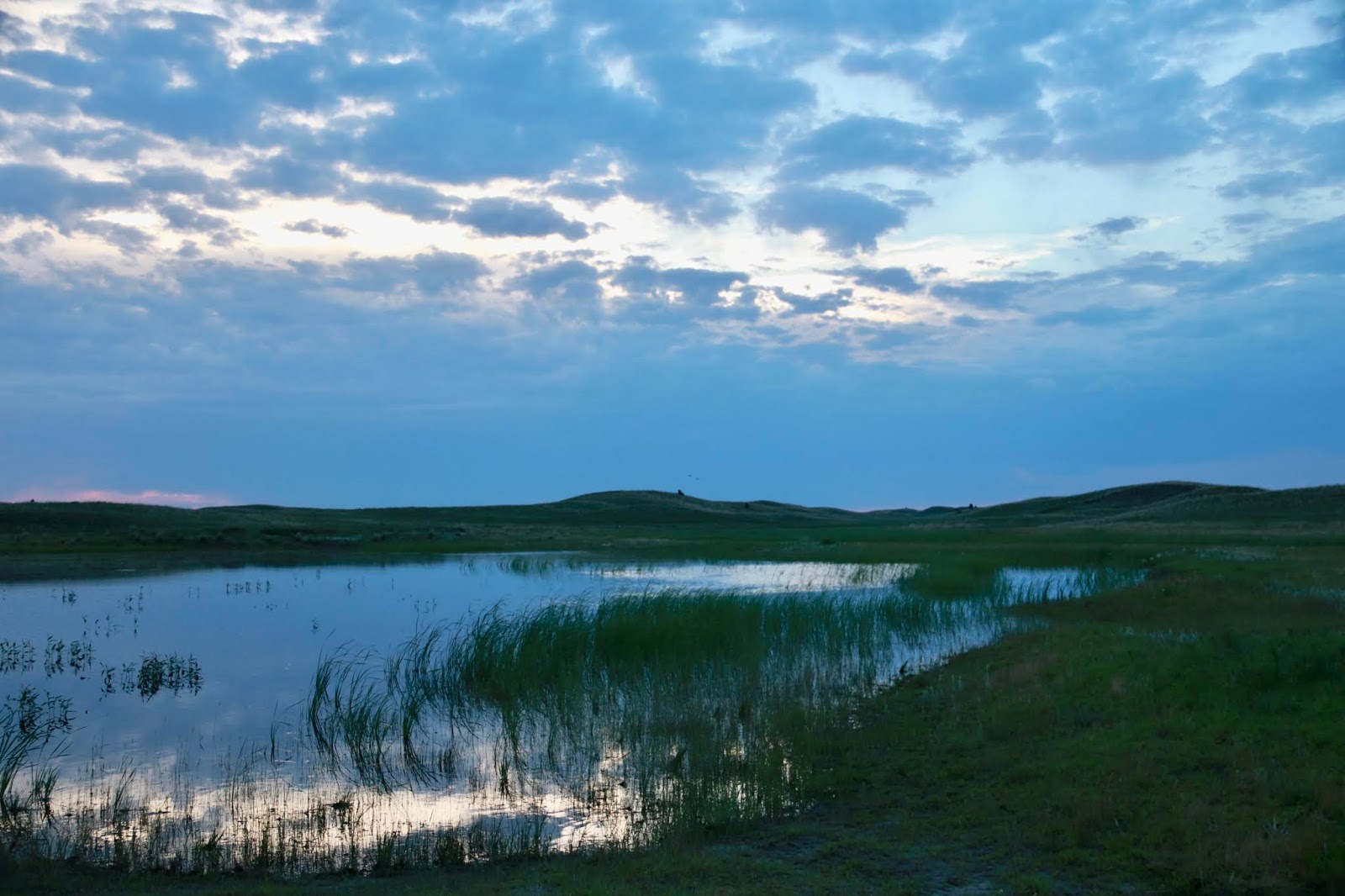
I’ve been thinking about the Sandhills of Nebraska a lot this past week, it’s natural social distancing and beauty and people and animals. 

It’s a good time to do that while we’ve taken a pause on running around in our much denser  surroundings where it’s hard to avoid people and the things they’ve touched. 

It’s a good time to think about shades of green and tan grasses that turn to blue as evening brushes the hills. About clumps of cottonwood and oak and cedar trees that hide homesteads from view. And dragonflies, thousands of them, that fly unperturbed and perch on watering tanks and barbed wire fences. 
  
About white speckled calves that go about their business and cows that cast vaguely curious brown eyes at the human passing through their simple world. 

The ranchers and their families live distances away from each other and must travel miles to be in the presence of others. At the same time, they have sons and daughters that live just acreages apart and come and go easily, to sit at the table in the main house to talk about what needs fixing, or who will run whatever errand, or how a grandson or granddaughter did in Nebraska’s big rodeo in Burwell.

It’s a peaceful, unencumbered existence that would feel reassuring and downright welcome in these times. 

Let me follow all this with a disclaimer. I’m not from the Sandhills. I’ve only even visited them a few times, once really into the heart of the land that makes up a quarter of the state. And only for several days.

But I absorbed a lot in those days of talking to the people who live and work there, riding in their pickups and side-by-sides over rolling, bumpy hills that went on and on, rising up hundreds of feet, and just when you think you’ve reached the highest, another rise, and another.  


It’s not that they don’t have anxieties. They worry about protecting their land and livings. They are duty-bound to the natural life – from the inch-long burying beetles that make a home there to the tall whooping cranes that cut through the overhead skies on their 2,500-mile migrations -- and the domesticated animals that roam there. To the delicate sands and grass, and what lies deep below, the Ogallala Aquifer, with its sky blue waters that bubble up in low lying areas and form impromptu pools.


They talk about their land and work and their responsibilities to both with fire and dedication. 

I was decades old when I discovered the Sandhills, but I’m grateful I finally did. This sojourn to this place has given me a needed mental shelter in the coronavirus tempest. 

Saturday, March 14, 2020

Words I Would Like to Hear from the President


by Marilyn Moore

Good evening, my fellow Americans.  These are trying, challenging, unprecedented times.  I want to visit with you tonight about some things that I’m thinking about.

Let me begin by expressing my deep sympathy to the families of the 58 Americans who have died from COVID-19.  These 58 persons, men and women, living in various regions of our country, and their families, are the faces of this disease….a reminder that for every number we cite, there is a person, a family, a loved one, within that number.  I join these families in their grief….

I’ve been thinking about why this disease is so scary, and I think the answer is in the name of the virus – the novel coronavirus.  This virus is novel, it’s new, and we don’t yet know much about it.  It seemed to spring up quickly and spread rapidly.  We had a minimal number of test kits for it, and we still don’t have an adequate number.  We don’t have a vaccination against it, and we don’t yet have an evidence-based treatment for it.  We don’t know for sure how it spreads, and we don’t know why it’s so mild for some patients and so dangerous, indeed, fatal, for others.  The symptoms are similar to that of a cold and influenza, but it’s much more deadly.  And we don’t know how to stop it.  This is a dangerous disease; it’s spreading rapidly, and people have died.  Those statistics will get worse before they get better.  All of this is scary to most of us.

I want to acknowledge and thank the scientists, in this country and around the world, who are working with diligence and persistence to answer those questions.  The infection disease specialists, the epidemiologists, the microbiologists, and those from many other disciplines, who are at the Center for Disease Control, the World Health Organization, and many public and private research universities are engaged in basic and applied research to understand this virus and this disease, to develop and test vaccines and treatment plans, so that all of us will have a better chance at health.  We must commit more of our national resources to this research, now and into the future, and I pledge my support for that effort.  Thank you to the scientists; your expertise is absolutely essential.  I urge all of us to support their work, and I ask that you check the WHO, the CDC, and your local and state health departments’ web sites for updated information and recommendations; please, trust the scientists. 

All of us have heard of the importance of maintaining social distance and of staying home if we’re ill.  I want to acknowledge that there are many people in our country who will not be able to do this.  They are people who are exposed to the disease, because they are the people whose jobs don’t include the option of working from home. Many of them are people who serve us – they check us out at the grocery store, they prepare and serve food to us, they make our favorite beverage at the coffee shop, they clean the places we work.  And through their work, they come in contact with members of the public hundreds of times a day.  They are also the people least likely to have health insurance, least likely to have paid sick leave.   The recently passed bipartisan legislation will address a safety net for people who need to stay home because they’re ill but who have no paid sick leave.  It’s in the public interest, it’s in our interest, that people not have to make a choice between staying home while ill and earning the salary their family needs.  We need to address this issue on a more comprehensive basis in the future, and I pledge that I will support this basic public health need.

There are other employees who are also serving us and working in jobs that cannot be done from home, and those are our medical providers.  Thank you, thank you, thank you, to physicians and nurses and nurse assistants and others who care for seriously ill patients in hospitals and nursing homes and clinics.  You are truly heroes, and I salute you. 

As schools across the country have closed in an effort to minimize the spread of this disease, the role that schools play in caring for our schools has become stunningly clear.  Schools, especially public schools, because most children are in public schools, are the reliably safe and nurturing place for millions of children every day.  And as one person said to me, “I realize how fragile the safety net is for so many of our children when school is suddenly canceled.”  Many children have their best or only meals of the day at school.  When they are home, there may not be an adult with them.  This is not because their parents don’t love them or care about them, but because their parents don’t have the resources to quickly arrange another child care option for an unexpected and lengthy time out of school.  I want to thank public schools for the work they do every day to teach our children and to care for them in so many ways.  I want to thank those non-profit agencies, like food banks and family services agencies, whose staff and volunteers are stepping up to provide basic support to children and their families during these coming weeks.  You do it all the time; it’s simply more urgent, and more visible, right now.  Thank you.

From all that I’ve observed, and learned, over the past several weeks, it is so very clear that we are a global, interconnected people.  When the economy in one country collapses, it affects the economy in other countries.  When a novel virus appears, it does not stop at national boundaries, nor at the edge of an ocean.  Within our nation, when one system, whether it is public health, or K-12 education, or transportation, is affected, all other systems are affected.  We do not live in isolation, and we cannot thrive in isolation.  We are meant to live in community, and the community is global.

Which brings me to one last thought this evening.  Some members of our communities are much more vulnerable than others – the elderly, those with underlying health conditions, and those who have compromised immune systems.  These people are taking seriously the recommendation to stay inside, to reduce contact with others.  Many of these persons will be isolated for several weeks.  I am heartened by the stories that I have heard of neighbors and volunteers who are checking on these good folks, who are delivering groceries to those who are isolated, who are making phone calls and using social media to maintain connection.  Physical isolation is hard; if it becomes social isolation, it’s even more difficult.  Thank you to those of you who are reaching out in this important way.

We will come through this in some time, though we don’t yet know when that will be.  (It’s among the many things we don’t know.)  And when we do, when we look back at this time, I hope we will learn from it.  I hope we will view our neighbors, those who live on our block and those who live in other nations, with kindness and compassion, rather than with resentment and suspicion.  We each have the potential to make bonds stronger, to add to the quality of life for our families and for all families.  I invite you to live into that potential.  May God bless all of us and each of us, wherever we may be on planet Earth. 

Saturday, March 7, 2020

Planting pansies, my harbor
in these strange times

By Mary Kay Roth 

I am planting pansies today. 

One of the earliest of my spring rituals, I’m planting even sooner than usual this year, as pansies arrived in local nurseries right along with migrating geese and thawing temperatures.  

“Now remember, you’re taking a risk,” warned the thoughtful gentleman from the greenhouse.   

Fair enough, I’m willing. There’s something singular about planting pansies, hearty little sprites that continue to surprise me when their jarring, brilliant colors shock the gray and forlorn landscape of my yard.

For many of us, the landscape of the country has also been forlorn this winter with months of rough and tumble times that strained our stamina.  Spring was supposed to be our salvation, the reliably cheery season with resurrected barbecues, lines for the carwash, the promise of warmth and light.

But just as our celebration commenced, just as we emerged from deep hibernation, we were gob-smacked with a deadly viral beast stalking the world – and inevitably heading straight for our own front doors. I must admit, COVID-19 is the perfect name for a villain virus.  I can picture it sheathed in black, heaving and breathing with the menacing voice of James Earl Jones: “You don’t know the power of the dark side.”

So we all brandish, not laser guns, but bars of soap and bottles of sanitizer, attempting to battle the elusive enemy by furiously washing our hands, carefully assessing the state of our food pantries and, just as carefully, trying valiantly not to peek at our bleak financial portfolios.

This is indeed serious and scary stuff.  I can wash my hands raw and buy a cart-full of canned goods, but I still can’t find a soft place to land.  

I can, however, plant flowers. I can dip my hands into good, clean earth, sow my seeds, refill my flowerpots and keep the faith these pansies will flourish and open into a palette of deep purples, pale lavenders and sunshine yellows.

Pansies actually have a delicate look about them with their velvet-like blossoms and heart-shaped petals. Don’t be fooled.  They may not seem as sturdy as the solid sunflower, nor as durable as the dependable zinnia.  But they are the most robust flower I know. A poet once called them “the hockey goaltenders of the plant world.” You can dump them in your flower beds and windowboxes and they’ll be just fine, hale and hearty, even when faced with March’s frigid blast.

They are survivors.  So are we.

Rest assured I don’t think pansies will fix the world’s woes and I don’t believe spring showers will wash away the coronavirus. 

In the months ahead, I will recycle and I will vote. I will ease up on plastics, volunteer for good causes, shop local and carpool. I’ll pay my taxes on time. I will post signs in my yard for candidates I believe in.  I will also pledge to wash my hands diligently and, if I get sick, to responsibly stay home.

But for today, just for today, I will enjoy my cup of coffee. I will think about the scent of my granddaughters, cradled in my arms on a Friday sleepover. I will rejoice that I actually got the jam jar open this morning.  And I will remember the honey golden light suddenly splashing into my window at dawn, right alongside the earliest of birdsong. Because, yes, the first robin is back, and the second and the third, and there are sandhill cranes dancing along the Platte River.  

Today I will let others rage on about the trials and tribulations of Daylight Savings Time, and about the true analysis of Super Tuesday.

Today I am planting pansies.  And for now, that’ll do.   That’ll do just fine.

Sunday, March 1, 2020

Stoking the Fires of a New… Whatever

By Penny Costello 

I was so ready to put 2019 behind me. In fact, the whole decade of the twenty-teens had pretty much worn out its welcome. The past year had been marked by loss – first of a member of my dog family, Etta Bear, a sweet and salty border collie who had been one of my life’s greatest teachers; followed by the death of my father a week later. 

The decade had its milestones as well. In 2014, I survived a 30-foot fall headfirst into a ravine ironically called “Dead Man’s Run”, from which I sustained a broken neck and concussion. In 2015 my partner of nearly 20 years and the love of my life became my spouse in the first-ever same-sex wedding to occur in the State Capitol Rotunda, gleefully and precociously officiated by Senator Ernie Chambers. Thank you, Senator Chambers, for tenaciously fighting for our right to do that for nearly three decades. In 2016, we “gave birth” to two teenagers when two of our five grandchildren came to live with us. In 2017, we became their legal guardians. In 2018, I turned 60 and left a 22-year career that I loved, largely due to the residual impacts of the brain injury sustained in 2014. With 2019 came a very welcome and exciting new job followed a couple of months later by the deaths of my dog and my father. So, yeah, at the end of 2019, I was tired.

The exhaustion wasn’t only due to the events in my life that I wanted to acknowledge and transcend. It was what is happening in the world. An increasingly divided country, the loss of respectful and productive discourse, the continued assault on the planet, and oppression of civil and human rights.  Climate change, ecological collapse, mass extinctions.

I sometimes like to welcome a new year with a ceremonial purge of the things I want to leave in the past. I write down thoughts, self-talk and habits that no longer serve me, unhealthy aspects of relationships to let go of or improve upon, and aspirations for new beginnings. Then I build a fire and at the stroke of midnight, welcome the new year by burning those pages I’ve written, sending the smoke up as prayers for continued growth and wisdom.

If any year warranted such a ceremony, it was 2019. So, on New Year’s Eve, we invited a dear friend and neighbor to join us for dinner to ring in the new year and send the old one out with prayers of smoke. But it didn’t go as planned. We had a delicious meal together and settled in the living room until it was time to start the fire. At 10:30, I fell asleep. And that’s how I said good-bye to the twenty-teens.

The new year welcomed me as I woke up to a bright, sunny morning. It was cold and breezy, but clear and crisp. I was determined to have that fire ceremony. In doing so, it brought a shift in thinking, and a sort of epiphany. Starting that day, this year, and this decade by looking ahead rather than looking back felt like a more productive investment of energy. 

I began to build the fire as I had so many times before. Starting with a base layer of dried leaves and twigs, on top of which I piled kindling topped off by a few slightly larger pieces of wood, but not heavy enough to collapse the pile. The leaves were slightly damp from a layer of frost the night before. So, they smoked a bit as I tried to ignite them. They began to burn and then hesitated to a glow around the edges. I gently blew on them until they burst into flame, bringing the fire to life.

That’s when the epiphany struck. Building a fire is very much like building a life. It’s all about the proper balance between air, energy, and fuel. You need to know when to intervene, and when to leave it alone and let those elements just interact. You need enough dry leaves or paper at the base to sustain the flame until the kindling can catch and feed the fire to those larger pieces of wood. You need to know when to add more fuel; whether to blow on the embers or poke it and re-situate the twigs and branches to help the interaction between air, energy, and fuel. If you poke it too much or pile too many big pieces on too soon, the whole thing collapses and smothers itself and you have to start over. Yeah, life is just like that.

At 10:30 on New Year’s Eve in 2019, there were too many big pieces, not enough air, not enough energy, not enough of the right kind of fuel, and the fire in me collapsed and smothered itself. As I tended that fire the next morning, letting the smoke from the damp leaves envelope me as it made its way into the universe, the fire spoke to me of this sacred interaction between air, energy, and fuel. As the fire burned, building a hotter, thicker bed of embers that would sustain the fire for as long as I chose to tend it, my thoughts turned to the bed of embers in the metaphorical sense. Who and what established the embers in the fire of my life. 

A family heritage that allowed me to grow up on a ranch in western South Dakota. My first landscapes were the Badlands and the Black Hills, which instilled awe and a love of Nature and animals. A childhood spent outside, fueling imagination, self-sufficiency, and resilience. An extended family with dozens of cousins who taught me perspective and never let me take myself too seriously. A grandmother who was a safe place in hard times, and helped prepare me to be the same for my grandchildren. A partner who has given me the gifts of love, forgiveness, family, and never lets me take myself too seriously. The dear friend who helped rescue me from the bottom of Dead Man’s Run, and who forgave me for falling asleep at 10:30 on New Year’s Eve. A border collie named Etta Bear who taught me that I don’t know as much as I think I know, and maybe I should just watch, pay attention, and learn. A father who cherished me, challenged me, enraged me at times, and waited for me to get to his bedside so I could hold his hand and thank him before he passed. 

That bed of embers burns hot and bright with those memories and experiences, and so many more. All the friends, mentors, tormentors who have tickled me, taught me and taunted me. These experiences have shaped me, for better and for worse. The interconnection between all of us, this planet, this universe provides the air, the fuel, and the energy for everything. 

As I tended that fire, smoke, and prayers rising and dissipating into the heavens, a sense of peace settled over me. All of us have a conscious awareness of the lives we impact, and yet there are countless other lives we impact every day in ways of which we have no idea. What if we all walked through our days with an awareness of the fire we fuel in so many others’ lives? What if we resolved to act in ways that feed those fires, to help them through struggles and celebrate triumphs? To be that spark that ignites the flames. To be the breath that facilitates the interaction. To be an ember that burns hot and bright. To be a part that sustains the whole. This is my 2020 vision, and I welcome and embrace all who will join me on the journey.